Facing a lack of municipal budget for design and planning, Ksenia Gavrilova's team delivered a pioneering case study in community-led development: local citizens and businesses independently crowdfunded the development of the grant proposal. This initiative not only kicked off the ecological restoration of a 100-acre forest but also fostered an unprecedented level of local community ownership (ownership), which ultimately served as the deciding factor in securing the government grant.
1. The Challenge: Budgetary Constraints and Social Conflicts
The project faced three key systemic barriers:
- Lack of Seed Capital: The municipality lacked the funding required to draft a sophisticated, competitive spatial concept suitable for federal grant program submissions.
- Environmental Constraints: The site's status as a Protected Natural Area strictly prohibited capital construction, demanding highly delicate, low-impact landscape design solutions.
- Stakeholder Conflicts: The forest was a battleground of competing interests among professional athletic groups (local ski academies), eco-activists, and residential interest groups. The absence of a shared vision stalled any prospective development.
2. The Solution: Social Contract and Place Identity
To overcome the impasse, a multi-tiered stakeholder engagement and management strategy was implemented:
- Crowdfunding Model: For the first time in local municipal practice, a crowdfunding campaign was launched to finance the master-planning phase. Contributions from local business owners and residents established a deep sense of collective ownership, removing deep-seated distrust toward municipal authorities.
- Conflict Mediation & Participatory Design: A series of zoning workshops was held, bringing conflicting user groups (skiers, pet owners, families with children) together to co-create a spatial system for separate pedestrian and athletic flows. This resulted in a mutually agreed-upon, conflict-free master plan.
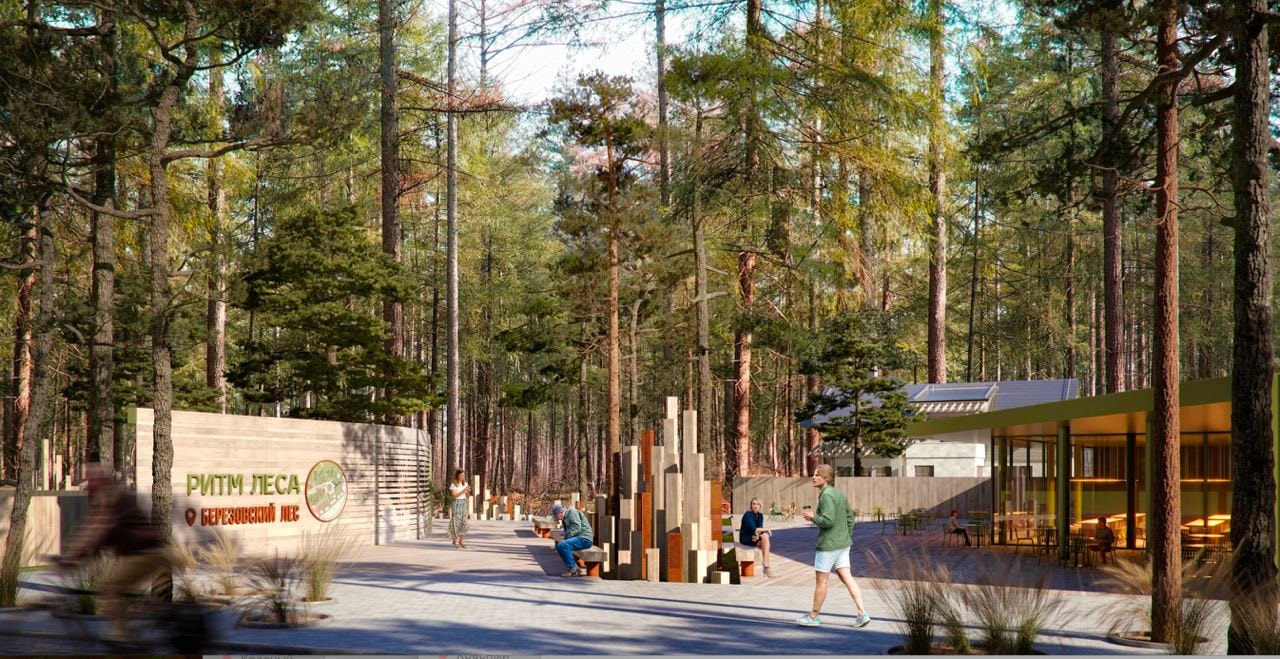
- The "Forest Rhythm" Concept: The project’s visual design-code was deeply integrated with the cultural heritage of the town (the birthplace of Pyotr Ilyich Tchaikovsky). This musical identity was translated into interactive architectural installations and navigation elements, establishing a unique brand identity without disturbing the pristine natural ecosystem.
- Ecological Engineering: High-durability elevated wooden boardwalks on pile foundations and eco-trails were developed to protect root systems and safeguard local forest biodiversity.
3. The Impact: Economic and Social Resilience
The project won the national grant competition, securing substantial public and private capital.
- Investment Inflow: Attracted $1.83M in public funding. In addition, the strategy catalyzed $340K in private investment for local commercial amenities (cafes, equipment rentals, hospitality services).
- Strategic Legacy: Established a coherent water-green framework that serves as the foundation for the town's long-term connectivity and urban planning.
- Social Capital: This tri-party co-financing model (citizens, local business, and government) proved highly scalable, becoming a blueprint for other urban renewal initiatives in the region.
In the Expert's Words
"Votkinsk proved that when citizens are willing to invest their own money into a project's inception, they become its most dedicated guardians. My task as a strategist was to transform this raw community energy into a rigorous technical dossier capable of passing any level of professional audit. We didn't just build a park; we built a mechanism for collective action."
— Ksenia Gavrilova