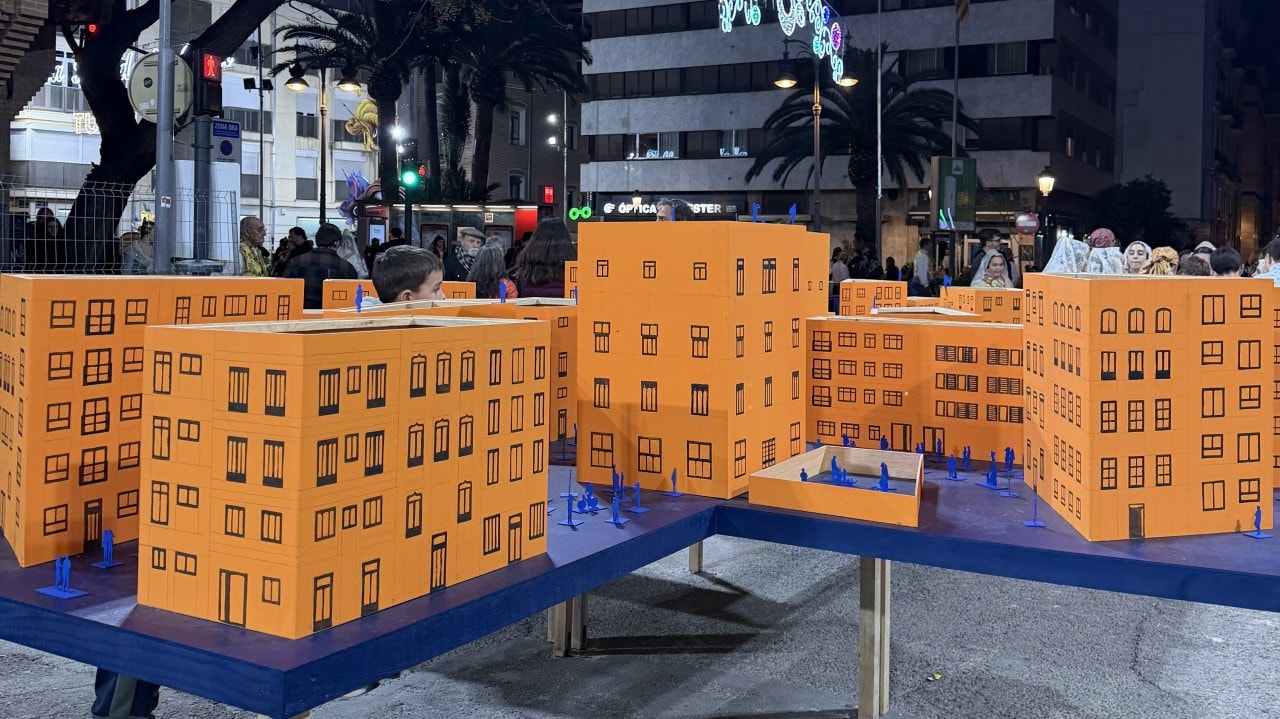
Valencia consistently ranks as one of the most comfortable cities in Europe to live in. But once a year, this laid-back Mediterranean city undergoes a massive urban and economic transformation. It's time for Las Fallas.
For the average tourist, it's a spectacular festival featuring giant sculptures and relentless pyrotechnics. But for me, as an Urban Strategist, it is an outstanding case study in Event Economics—a masterclass in how a historical tradition can become a regional economic engine.
From a Carpenters' Bonfire to a City-Forming Enterprise
In the 18th century, Valencian carpenters (members of the Guild of St. Joseph) would do a spring cleaning of their workshops. As the days grew longer, the wooden stands (parots) they used to hold oil lamps during the dark winter months were no longer needed. The carpenters would take them out to the streets, pile them up with old wood shavings and scraps, and burn them.
Gradually, neighbors started adding old clothes to the bonfires, dressing up the wooden frames to mock local public figures. What began as a simple waste disposal routine evolved into a neighborhood competition. Centuries later, this basic socio-cultural tradition has mutated into a highly complex industry that stimulates local business, attracts foreign capital, and creates thousands of year-round jobs.
Temporary Urbanism: Infrastructure for the Experience Economy
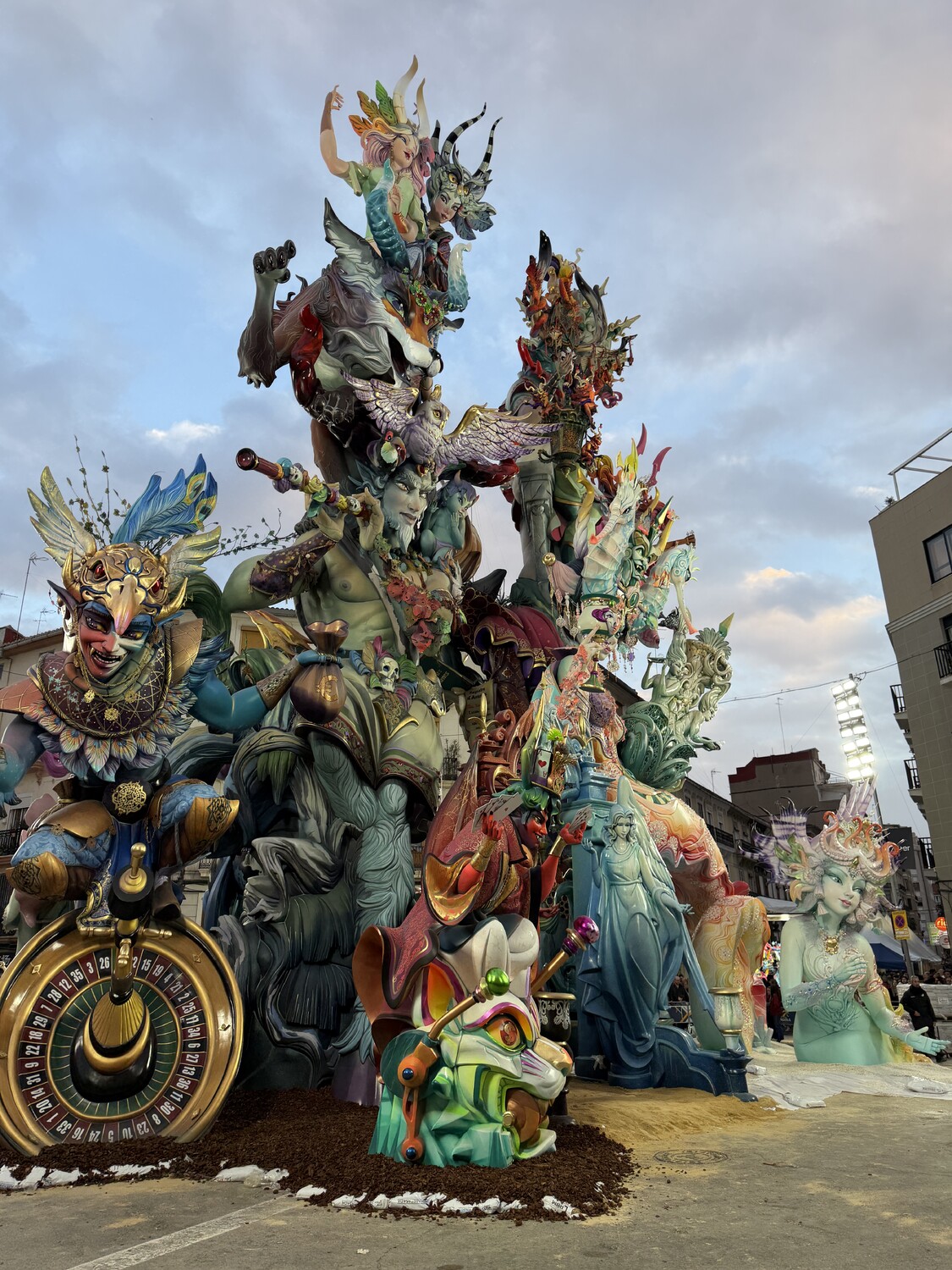
In March, Valencia temporarily redesigns its physical structure. Hundreds of streets and intersections are closed to traffic to make way for temporary infrastructure: massive monuments (some as tall as a 5-story building) are erected, community tents (verbenas) take over squares, and street-food zones are set up.
This is an intentional infrastructure stress-test that the city undergoes for a massive financial payoff. This temporary spatial redesign allows Valencia to host a tourist influx that vastly exceeds its own population.
The Hard Numbers: The Macroeconomics of a Festival
Any successful public event must deliver two things: social capital and direct economic benefit. According to recent studies (including data from the University of Valencia), the total economic impact of Las Fallas is estimated at over €910 million.
How exactly does a festival generate almost a billion euros?
1. The 2.06 Multiplier and 1-to-12 ROI
In territorial economics, we look at the multiplier effect. For Las Fallas, it is 2.06—meaning every euro spent by festival participants generates €2.06 of income for the local economy.
But the most staggering metric is the ROI for the municipality: for every €1 million the city invests in the organization and infrastructure of the festival, the local economy gets a return of €12 million in GDP. This is a level of efficiency that high-margin tech startups would envy.
2. Off-Season Liquidity
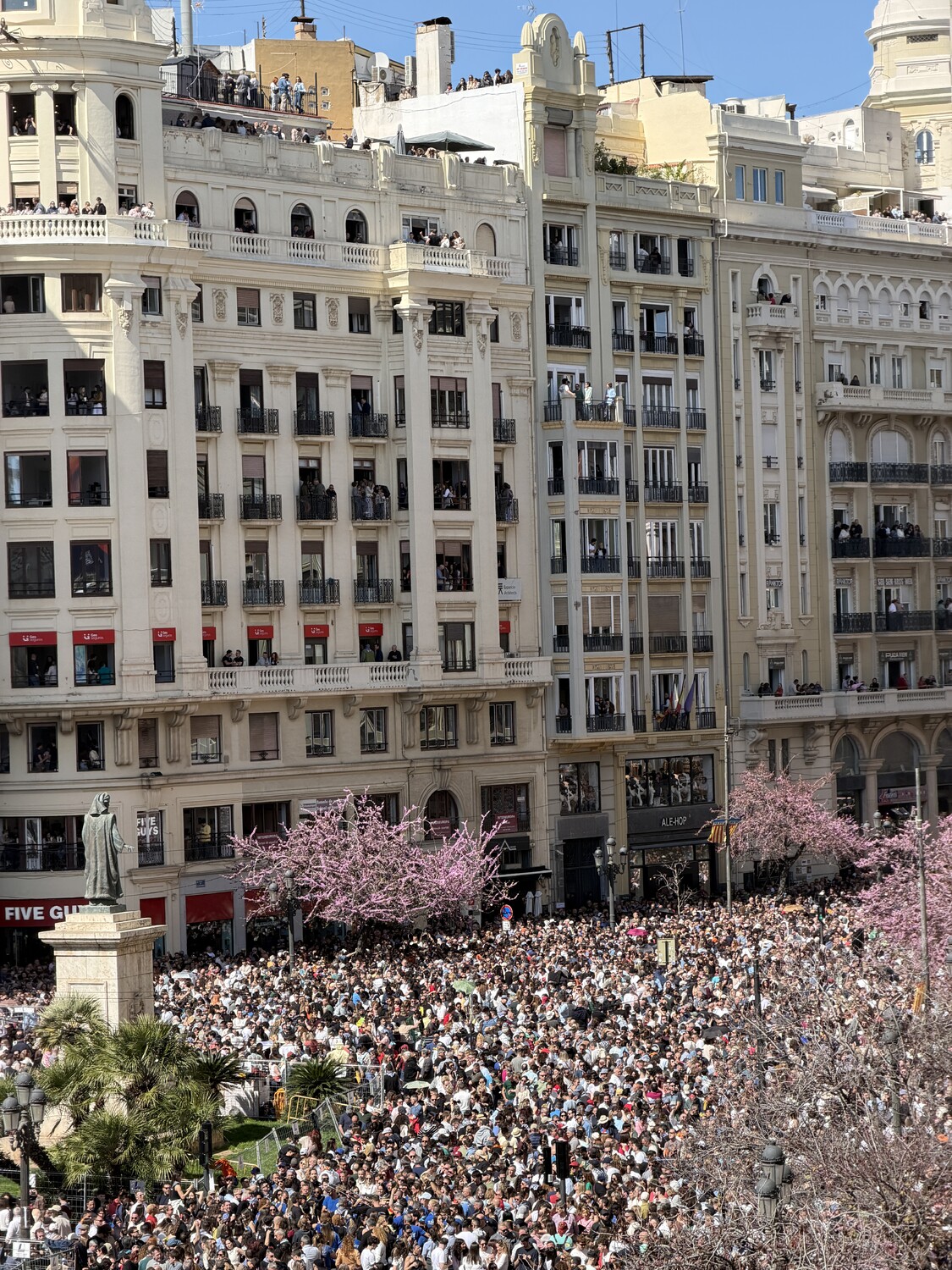
During peak years, the festival attracts up to 2 million tourists. This external traffic generates 69% of the total cash inflow (around €245 million in direct tourist spending). Hotel occupancy hits 75–90% in March—a month that is traditionally considered a "dead season" in other Mediterranean tourist destinations. The festival creates a massive financial cushion for the entire hospitality sector.
3. The Industry of the Ephemeral: Budget Caps and Jobs
Designing and building the giant figures (fallas) is an industry in itself. In 2025, total investments in creating these monuments reached roughly €3.7 million.
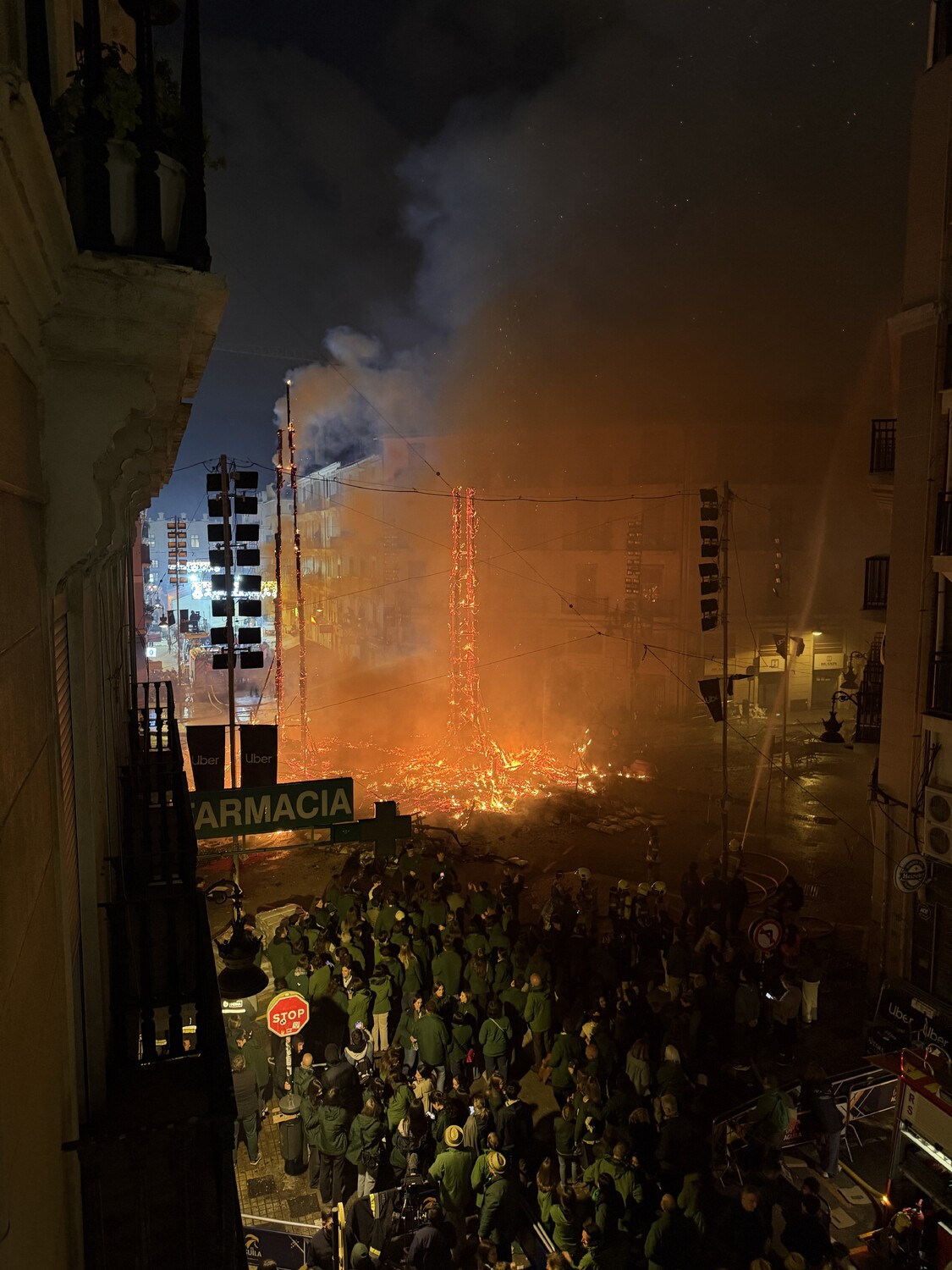
Interestingly, the city regulates this market: to prevent an uncontrolled "budget arms race" between neighborhoods, the maximum cost of a single monument is strictly capped at €260,000. Add to this the pyrotechnics industry, which generates another €8.5 million in turnover and sustains over 1,000 jobs. And after March 19th, all these monuments are intentionally burned to the ground.
4. Saving Heritage Through Export Potential
One of the most non-obvious economic effects is the capitalization of traditional crafts. The festival's participants (Falleras) wear dresses made exclusively by hand from traditional Valencian silk, woven with gold and silver threads. A single dress can cost anywhere from €20,000 to €100,000.
The traditional clothing sector in the region unites over 120 enterprises with an annual turnover of nearly €40 million. Crucially, about 50% of their revenue comes from exports. Because the internal demand of the festival keeps these rare artisan skills alive, their unique fabrics and lace are highly sought after by haute couture houses and theaters across Europe.
The Lesson for Developers and Mayors
Event Urbanism is a powerful tool for territorial monetization. City festivals and holidays should not be viewed merely as an "expense" line in the municipal budget.
With smart planning and the integration of local businesses, an event becomes a city-forming asset. It reshapes urban space, drives colossal foot traffic, stimulates exports, and generates hundreds of millions of euros for the local economy.