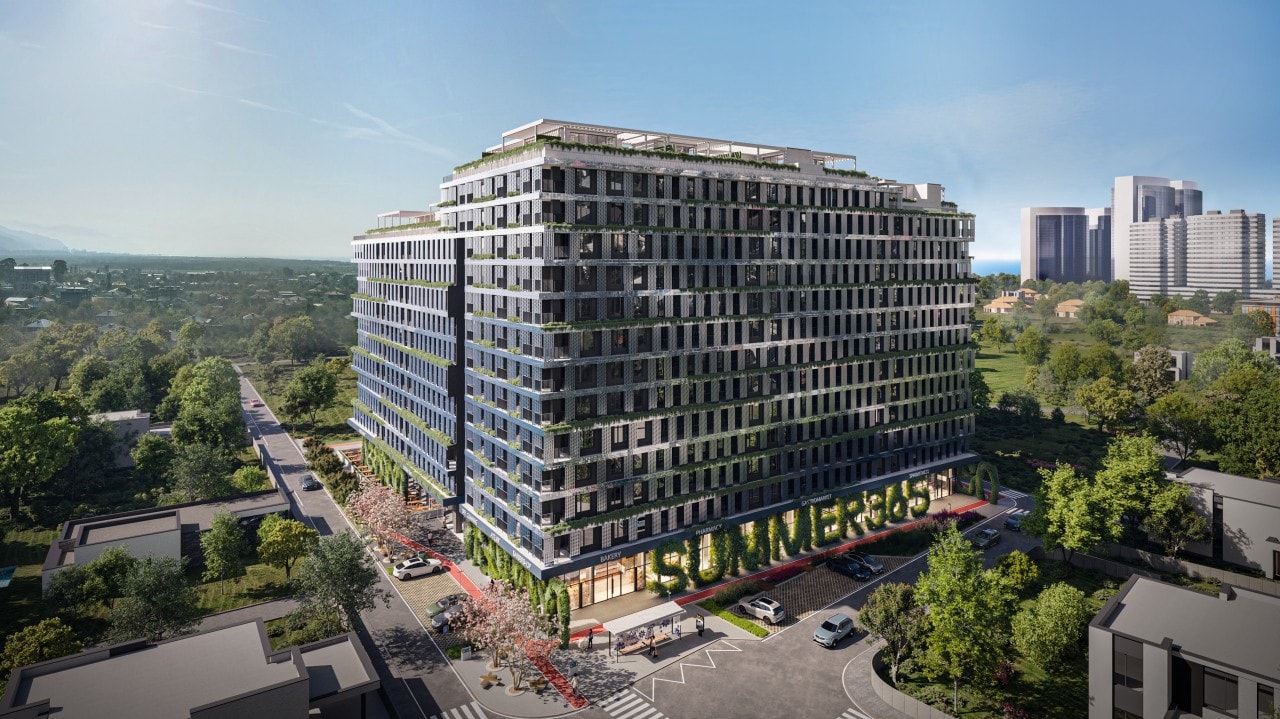
How Urban Sociology Brought the First Premium Family Development to a Resort Market
The real estate market in Georgia today is like a time machine taking us back to the early 2000s. The main focus for developers here is square footage. For years, cookie-cutter condos have been built along the Batumi coast, targeting seasonal tourists with the same pitch: short-term rentals, beachside fast food, and a guaranteed ROI.
But what if an investor wants to build a true premium-class home for year-round living—complete with a car-free courtyard, an on-site kindergarten, and a real community—in a city where such demand historically hasn't existed?
In 2023, I was invited to join the SUMMER 365 project in Batumi as Director of Product and Urban Consultant. Our task was to build the complex's positioning from scratch, prove that Batumi is a 12-month-a-year city, and convince the market that this vision was viable.
Here is how a product-led approach and deep sociology helped us change the rules of the game in a highly conservative real estate market.
Step 1. Ditching the Templates of Big Agencies
Initially, the investor approached one of Russia's most renowned architectural and consulting firms. They received a standard, cookie-cutter commercial proposal: "We'll design a logo, create a brand book, and here is our invoice."
But the project didn't need just a logo; it needed deeper meaning.
When I met with the investors, I proposed a different route: ask first, then draw. We assembled a unique interdisciplinary team and launched a massive sociological study. We needed to understand: who are the people willing to buy an apartment for permanent residence in a resort town? And what are they currently missing?
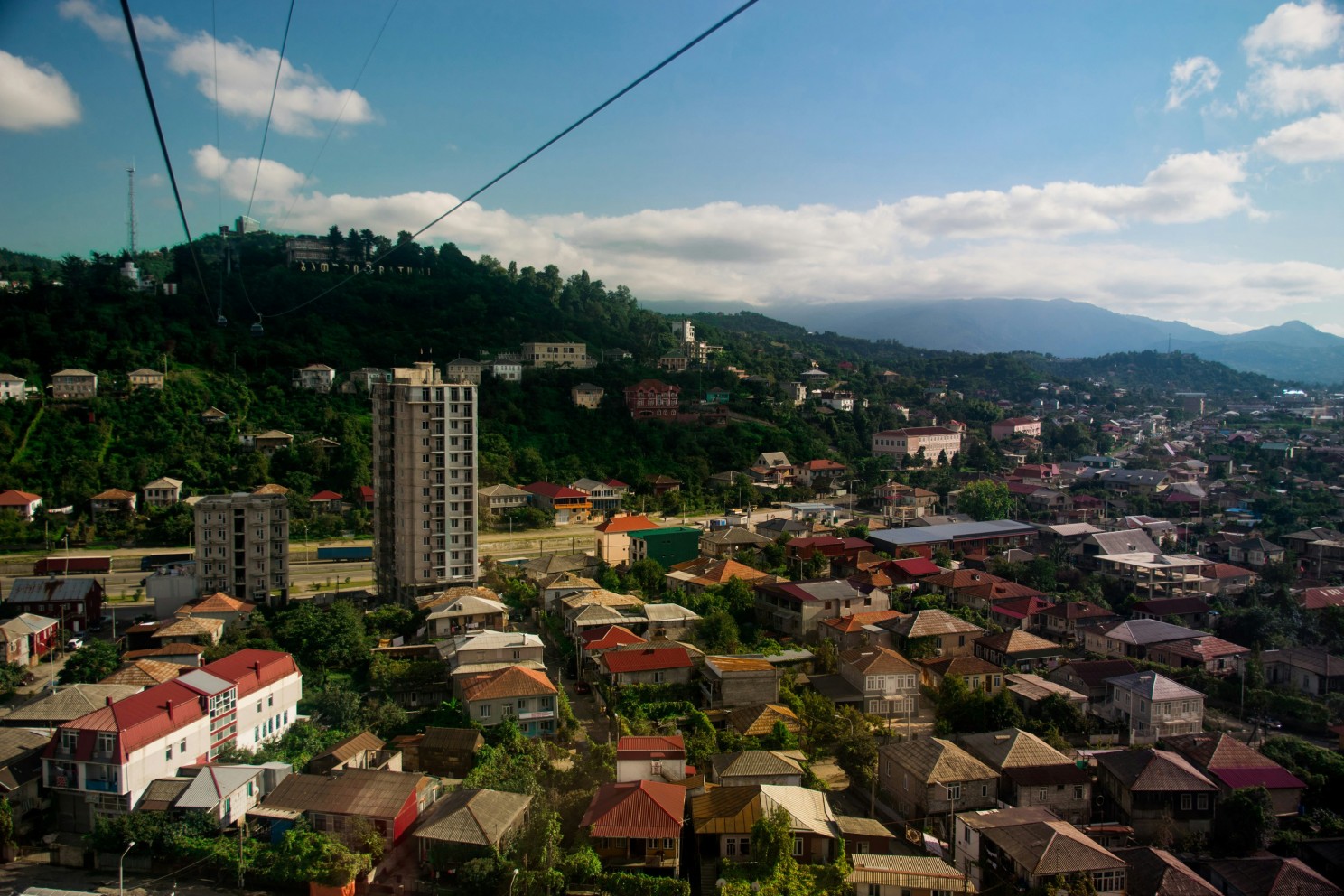
Step 2. Deep Sociology vs. The Dreamer Label
We segmented the audience into expats, locals, and relocated professionals, conducting dozens of in-depth interviews. It turned out the demand for a high-quality living environment was massive.
However, during the excavation phase, the local market was deeply skeptical. Being newcomers to Batumi, we faced a significant "trust gap." Many local experts labeled us as "dreamers" or even felt we were overpromising, simply because no one had ever delivered such a high-quality residential product in the city before.
The issue wasn't the pricing—our initial rates were actually excellent. The challenge was the disbelief that a "no-name" developer could actually bring this vision to life. The market expected us to eventually cave and return to the classic, worn-out Batumi scheme of building cheap short-term rental units. It was our sociological research that gave the founders the confidence to stay the course, ignore the skepticism, and prove that our product was rooted in real demand, not just fantasies.
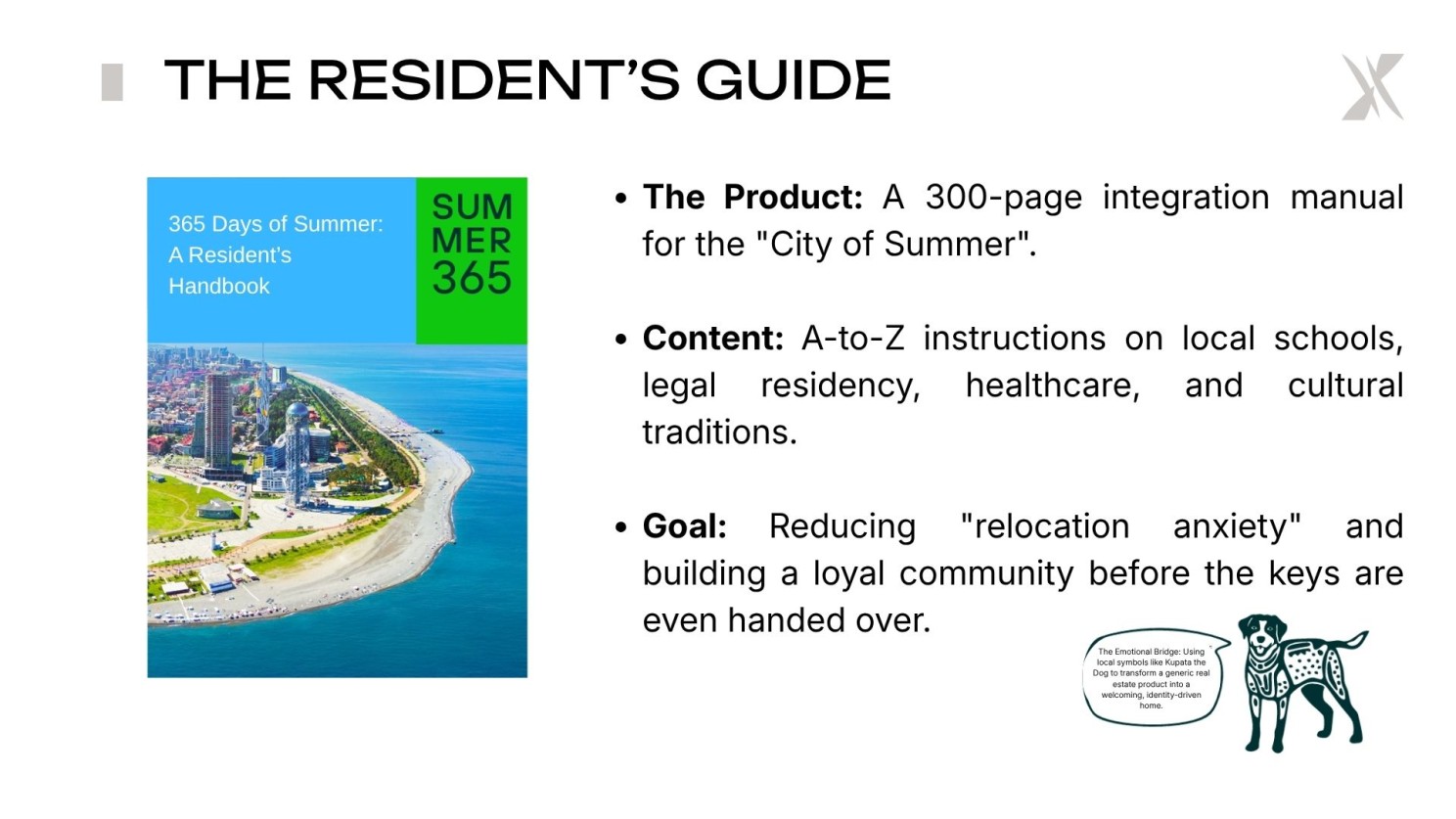
Step 3. The Resident Guide: The Crown Jewel of Analytical Strategy
Initially, the client wanted a simple, hotel-style orientation brochure—just a map of nearby restaurants and weekend getaways for tourist convenience. But we realized that to shift the market's perception, we needed something far more substantial.
The "City of Summer Guide" became the masterpiece of our strategy—the result of an 8-month intensive analytical marathon. Before even signing the contract, I spent two months conducting market benchmarking to determine the exact specialized team we needed. We assembled a "special forces" unit: GIS analysts, professional photographers, drone pilots for "bird's eye" views, architects, and a top-tier magazine designer. Crucially, we brought our copywriter to Batumi to live on-site, allowing them to walk the city, breathe its air, and document the authentic rhythm of local life.
We structured the 300-page illustrated book around the 12 months of the ancient Georgian calendar, adding a special "mini-September." This was a strategic nod to families: in Batumi, summer effectively lasts until September 15th, when the school year begins.
The guide moved beyond surface-level tourism to provide deep, actionable value:
- Practical Utility: Detailed roadmaps on how to enroll a child in the best local schools, navigate the healthcare system, or even obtain a Georgian driver's license.
- Hidden Identity: We mapped "ghost" locations that don't exist on Google or Yandex maps—secret spots for plane spotting near the runway, the best birdwatching points, and tucked-away ethnographic museums.
- Gastronomic Discovery: We bypassed the cliché khinkali and khachapuri to showcase the soul of Adjarian cuisine, featuring hidden family wineries and local desserts like sinori—the authentic "Batumi cinnamon roll."
Our "tour guide" through these pages was Kupata, a legendary local dog famous for helping children cross the street. By turning the project into a comprehensive lifestyle ecosystem, we provided residents with a roadmap for a life they hadn't even realized was possible in Batumi.
Step 4. Managing Chaos: The Presentation Nobody Believed In
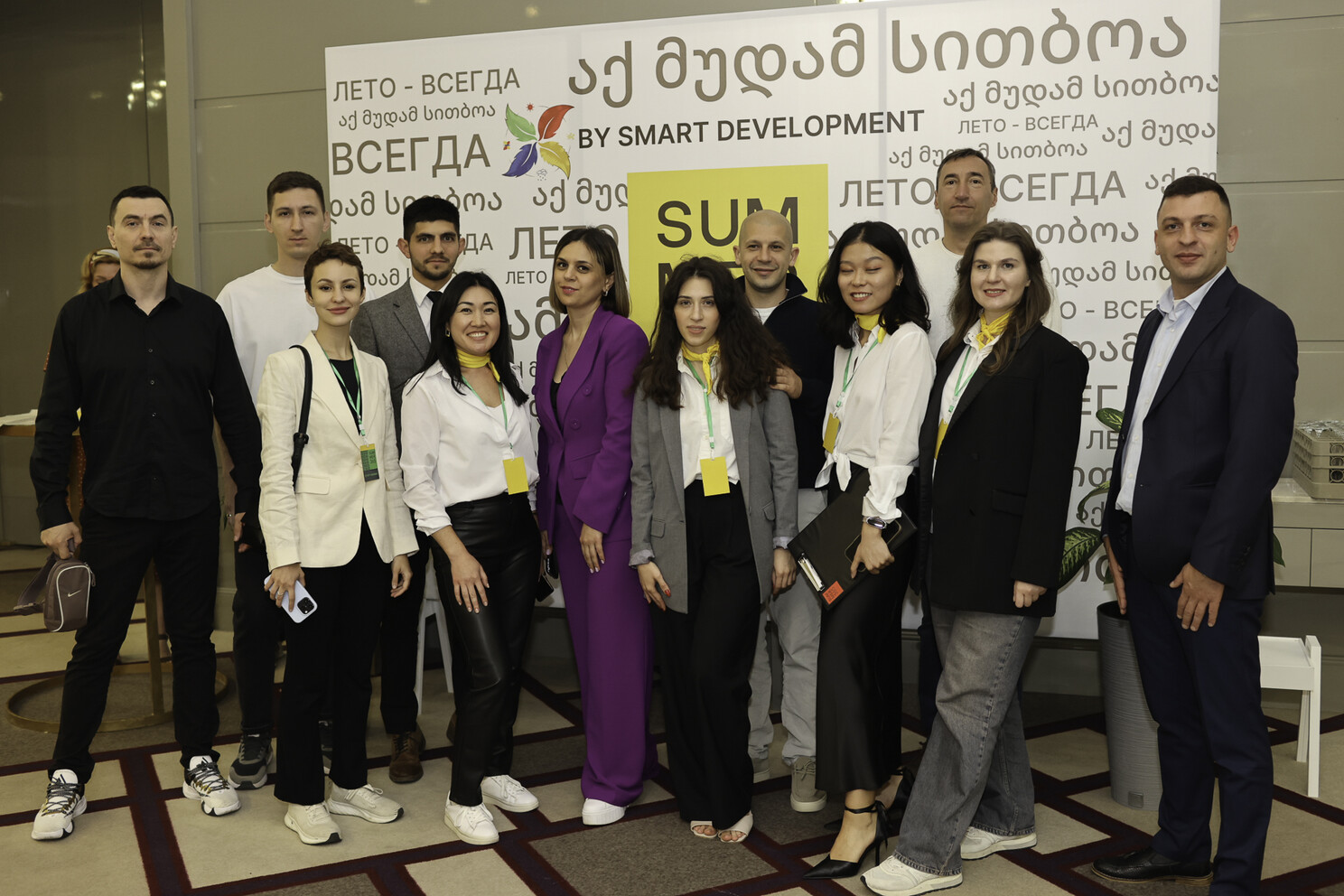
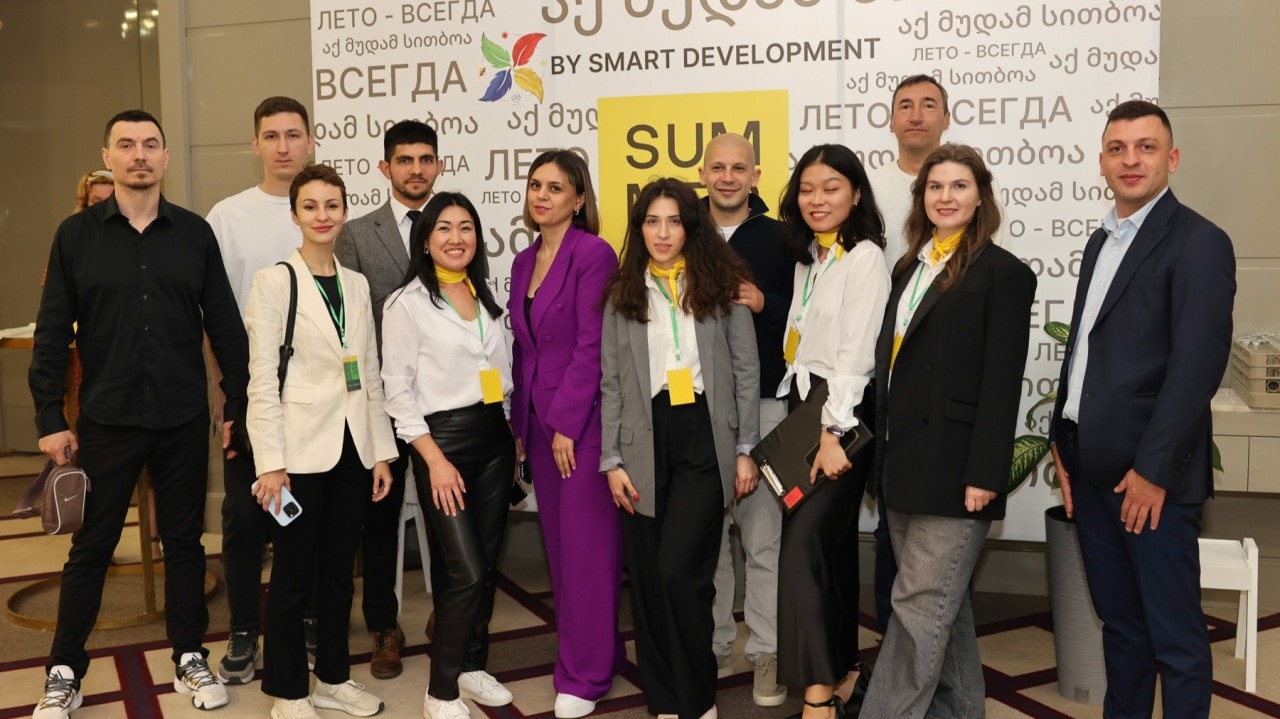
Simultaneously, we were building a relationship with the local community. Batumi is a city where the market is controlled by hundreds of independent real estate agents. They unanimously warned us: "You are a no-name developer. You don't even have a foundation poured yet. If you host an official closed pre-sale presentation, you won't even get 100 people to show up." We accepted the challenge. Over three months, acting as the event organizer and producer, my team and I prepared the launch. We rented the largest hall in the city, meticulously planned the lighting, sound, program, and the core messages the founders would deliver.
On Day X, over 500 people gathered in the hall. For Batumi, this was an absolute precedent. We proved that smart communication and strategic event management can overcome any local market skepticism.
How We Changed the Market
Today, SUMMER 365 is completing its monolithic concrete work and moving on to the facades. The hypothesis embedded in our research was completely validated: our core buyers were exactly those looking for a home and a neighborhood community, not a quick property flip.
But the project's main business achievement lies elsewhere. Following our market entry, at least five other developers have tried to copy our approach. They started announcing similar "family-oriented" formats. However, by only copying the outer shell, they often fail to grasp the inner meaning—who and what it is really for—because they lack the sociological foundation we built.
This project proved my core belief: in real estate development, the winner is the one who thinks about human needs, not just concrete, rebar, and floor counts. Urban design and development don't start with a beautiful 3D render; they start with the right question: "How will people actually live here?"